Moritz König from DAM - Deutsches Architekturmuseum - proposed a collaboration with my Digital Prototyping Lab at HfG. The idea was to make the smart modules of the Lange Bank actually smart.
Moritz König from DAM - Deutsches Architekturmuseum - proposed a collaboration with my Digital Prototyping Lab at HfG. The idea was to make the smart modules of the Lange Bank actually smart. Adding weather and climate sensors as a data source for the other two collaboration partners Fra UAS and UC Chile. Our students had the oppotunity to come up with creative ideas to visualize collected data or transform it into other realms of creative expression. Dennis Chilas from the art department joined the project with his online publishing lab.
Technologies
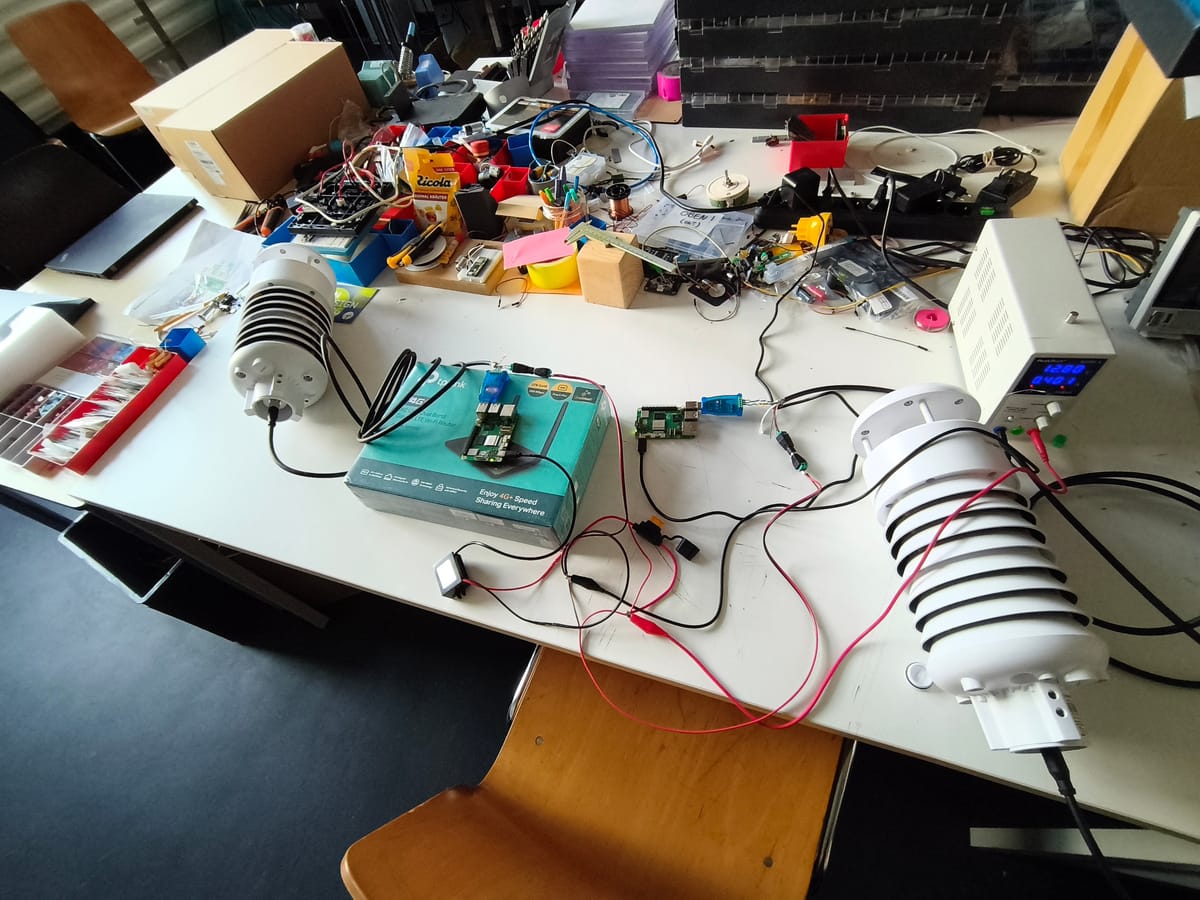
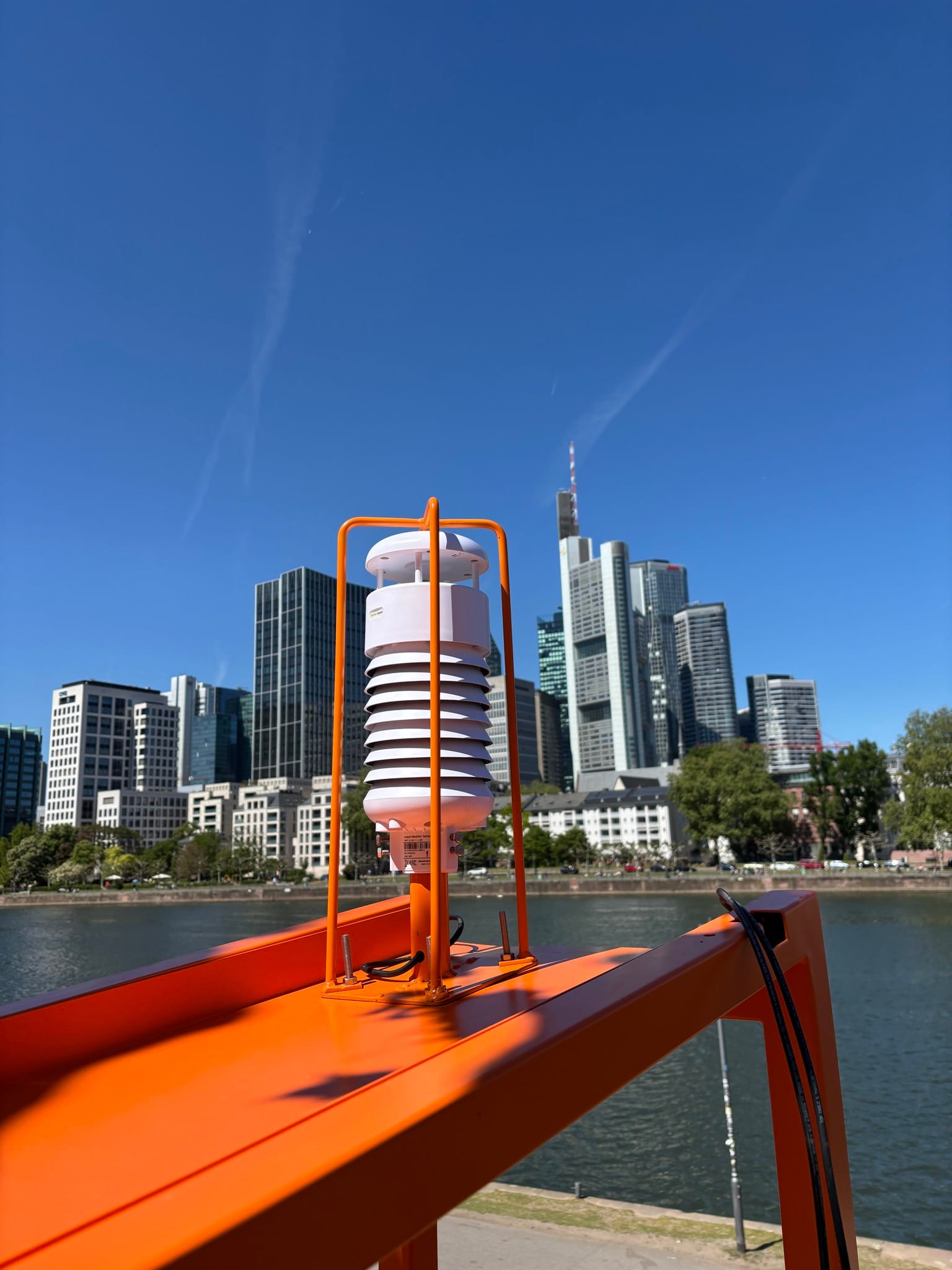
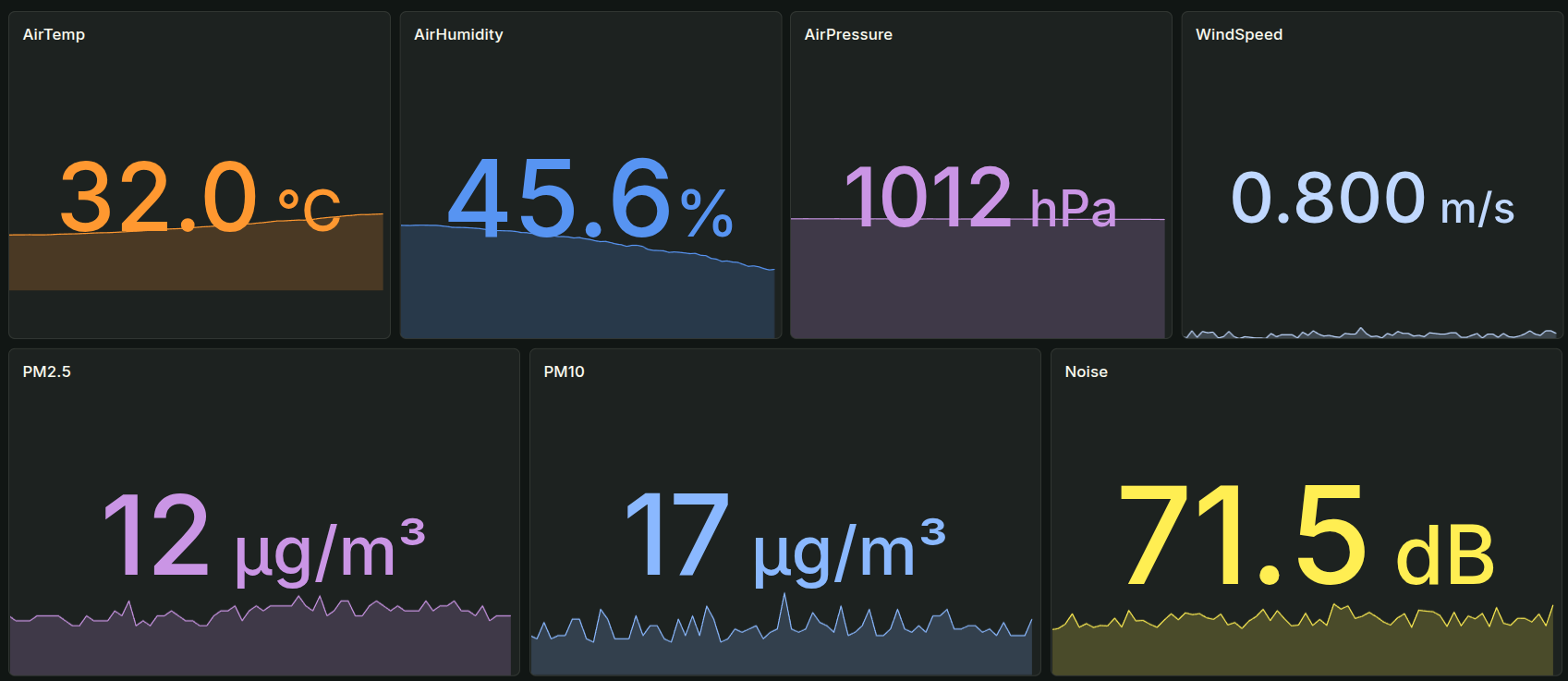
We installed weather stations, Raspberry Pis and LTE routers on both solar powered smart banks and started collecting data in May. Data is transmitted via RS-485 from the sensors to the Raspberry Pi. A python script reads from the sensor and sends data via a Wireguard tunnel to our server. On the server an API receives the packets via http POST, validates them and stores everything in a time series database. In this case we used an InfluxDB with Grafana as frontend for visualizing everything.
Project Ideas
Our students came up with a few interesting ideas from creating images to creating a soundtrack of the day based on the collected data. In the end we implemented the soundtrack and a preview version of the image generation. Denis students implemented two websites. One is using the weather data to generate an abstract representation of the current weather and one visualizes the data in a calendar to generate a kind of weather logbook.
Soundtrack
Weather data of the last 24 hours is compressed down to minute wide buckets of averaged data points. We get 1440 values for each measurement that influence 4 layers of the final soundtrack. The first layer is a drone sound that depends on temperature and humdity and gives the soundtrack its base tonal feel. The second layer is a bandpass filtered white noise with reverb. The frequency of the bandpass filter is modified by the wind speed. The result is a stereo effect of blowing wind that is triggered once the windspeed is higher 1m/s. The third layer is a stereo granular effect with echo that is controlled by the two different particulate matter variants, PM2.5 and PM10. It is triggered once PM is above a certain level. And the final and most prominent layer is an algorithmic composition of a piano like instrument that is controlled by ambient light and uv intensity. The interval progression is rule based. For example after a minor third upwards comes a perfect fourth downwards and after that comes a perfect fifth upwards after which comes a major second downwards. Depending on the change of ambient light the sign on each interval is switched and the melody has a more downward feel. Once it reaches certain bounds it gets transposed two octaves up, or down respectively. It uses different scales for day and night, a major scale for daytime and a minor scale for night time. The brightness also controls the speed of the progression. During very bright periods the melody is fast, during darker periods it is slow. It is only triggered above a certain level of brightness.
The soundtrack is compressed down to roughly 1440 seconds which is about 24 minutes.
Album Cover
The generated image is used as an album cover. The idea is to automatically take a photo with a camera mounted on each of the smart banks, let a locally running image description model describe what it "sees" and then generate a prompt from that and the collected weather data. This generated prompt is then fed to an also locally running diffusion model to generate the final image.
The currently visible album covers are only a preview and are only generated with the accumulated weather data fed into a diffusion model.
Websites
More about the websites here: https://die-lange-bank.digital-publishing.space
Cooperation
The project is part of an ongoing cooperation between Deutsches Architekturmuseum, Frankfurt University of Applied Sciences, Pontificia Universidad Católica de Chile and HfG Offenbach. Prof. Dr.-Ing. Paola Alfaro - d’Alençon manages the project on the side of Fra UAS and Prof. Renato D’Alençon on the side of UC Chile. Moritz König manages the whole project on the side of DAM and keeps all dots connected.